



Putting your motorcycle away for winter? Check what your insurance covers
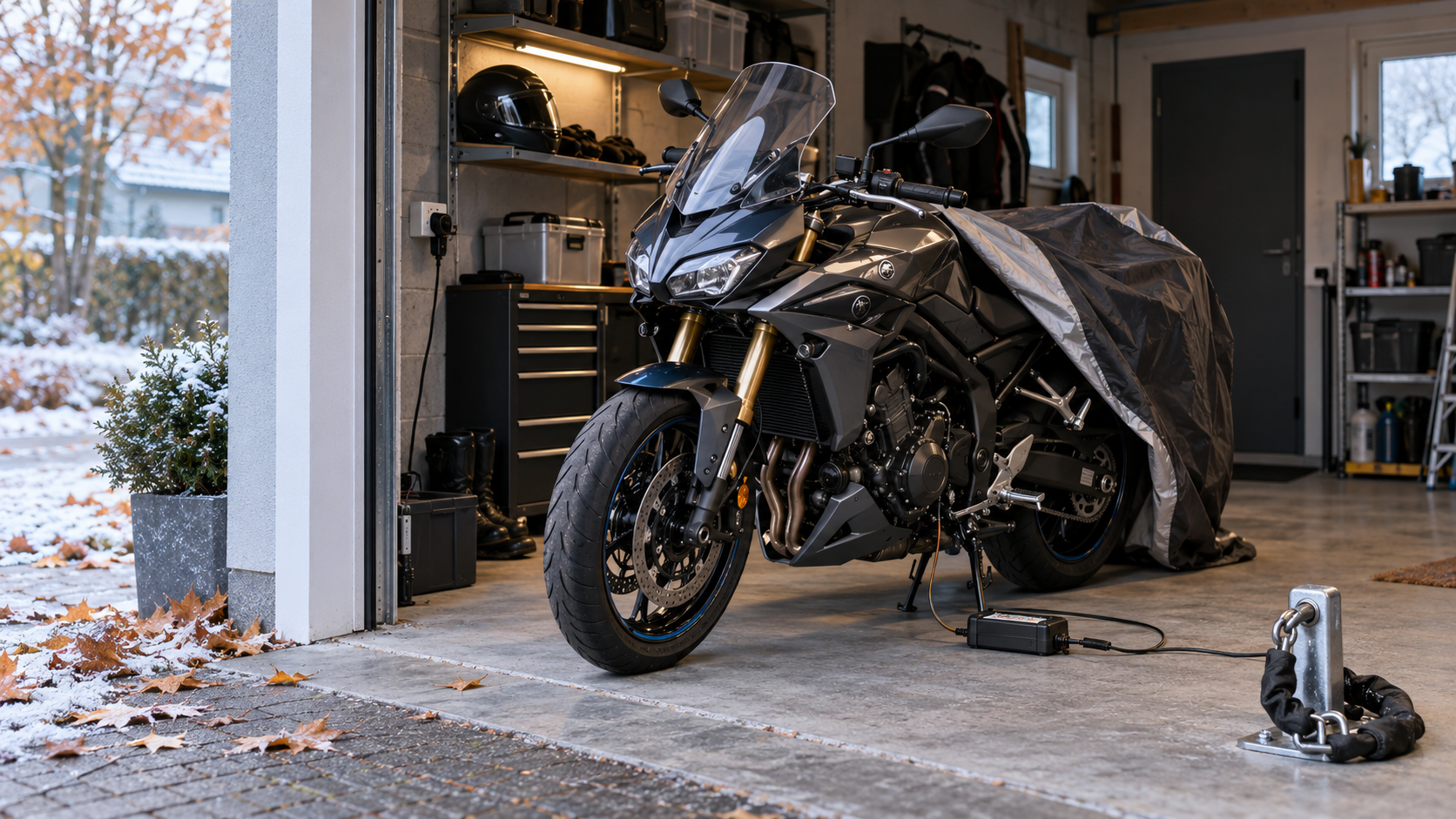
Motorcycle Winter Storage: Is Your Insurance Up to Date?
For many motorcyclists, autumn marks the point when the bike starts being used less frequently or is put away until spring.
Preparing a motorcycle for winter often involves cleaning it, maintaining the battery and protecting it from damp. All worthwhile jobs, but there's another important part of winter preparation that can be easily overlooked: checking your insurance.
A motorcycle can still be stolen, damaged or affected by severe weather while it's off the road. And even if you already have insurance, changes to where the bike is stored or how it's secured could affect your policy.
At Grove & Dean, our experience arranging specialist motorcycle insurance means we understand the importance of checking policy details before putting a bike into storage.
Some of these checks might seem obvious, but it's far better to identify a potential insurance issue now than discover it when you need to make a claim.
Here's what to check before putting your motorcycle away for winter.
1. Does your insurer know where your motorcycle is stored?
When arranging motorcycle insurance, you'll usually be asked where your bike is kept overnight.
This could be a locked garage, driveway, communal car park or the road outside your home.
If you're moving your motorcycle somewhere different for winter, your insurer or broker needs to know.
For example, you might be moving it from your driveway to a relative's garage or a specialist storage facility. Alternatively, your usual garage might no longer be available, meaning the bike will be kept outside instead.
Even if you believe the new location is more secure, don't assume that your existing insurance arrangements will automatically remain unchanged.
The storage location forms part of the information provided to your insurer when assessing the risk.
Before moving your bike, contact your insurer or broker to confirm whether the change needs to be recorded and whether any additional conditions apply.
2. Are you meeting your policy's security requirements?
Motorcycle insurance policies can contain specific security conditions.
Depending on the motorcycle, its value and where it's kept, these might include:
An approved motorcycle lock.
An immobiliser or alarm.
A tracking device.
A ground anchor.
A particular type of locked storage.
It's important to understand exactly what your policy requires.
Simply owning a security device might not be enough. Your insurer may require it to be fitted, operational and used whenever the motorcycle is left unattended.
For example, a motorcycle kept inside a locked garage might still need to be secured to a ground anchor if that's a condition of the policy.
Similarly, a tracker may require an active subscription, while an alarm may need to be properly maintained.
These details matter because failing to comply with a relevant security condition could affect a theft claim, depending on the circumstances and your policy terms.
Check your policy schedule and endorsements rather than relying on memory. If you're uncertain about any security requirements, contact your insurer or broker before putting your bike into storage.
3. Does a locked garage mean your motorcycle is automatically covered?
A locked garage can provide useful protection against theft and the weather, but it doesn't automatically mean every insurance requirement has been met.
The word 'garage' can also have different meanings within insurance policies.
An insurer may distinguish between a purpose-built, lockable garage, a wooden shed, a shared underground car park or a temporary structure.
If your policy specifies that the motorcycle must be kept in a particular type of storage, make sure your arrangements meet that definition.
It's also important to consider how the garage is used.
Leaving the door unlocked, failing to use a required security device or keeping keys somewhere easily accessible could affect the circumstances of a theft claim.
An insurer may need to establish where the motorcycle was kept, how it was secured, who had access and whether the relevant policy conditions were met.
These questions are much easier to address before anything happens.
If you're unsure whether your storage arrangements meet your insurer's requirements, ask for clarification before leaving your motorcycle there for winter.
4. Should you cancel your motorcycle insurance over winter?
If you're not planning to ride for several months, cancelling your insurance might seem like an obvious way to save money.
However, it's worth considering the risks that remain while your motorcycle is in storage.
Even when stationary, a bike could still be:
Stolen or damaged during an attempted theft.
Vandalised.
Damaged by fire.
Affected by flooding or storm damage.
Struck by another vehicle.
Damaged by falling objects.
Whether these events are covered will depend on the protection provided by your particular policy.
Cancelling your insurance removes that protection and may also affect your no-claims discount or other policy benefits.
Before cancelling or changing your cover, speak to your insurer or broker so you understand the implications.
What about declaring your motorcycle SORN?
If you decide to cancel your motorcycle insurance and keep the bike off public roads, you'll generally need to declare it off the road using a Statutory Off Road Notification (SORN).
A motorcycle with a valid SORN must be kept off public roads. It cannot simply be left parked on the street because it isn't being ridden.
Government guidance explains that a vehicle doesn't need insurance under the continuous insurance rules if it's kept off the road and has a valid SORN.
However, a SORN is a declaration to the DVLA, not an insurance policy. It doesn't provide financial protection if your motorcycle is subsequently stolen or damaged.
For further information, read the Government's official SORN guidance.
The rules above relate to Great Britain. Northern Ireland has different continuous insurance enforcement arrangements.
5. Have you told your insurer about modifications and accessories?
Winter is a popular time for motorcycle projects.
Whether you're fitting a new exhaust, upgrading the suspension, adding heated grips or making cosmetic changes, it's important to check what needs to be disclosed to your insurer.
Don't assume that a modification is irrelevant simply because it doesn't increase performance.
Even cosmetic alterations can affect a motorcycle's value, desirability or repair costs.
Before making changes, review your policy requirements and inform your insurer or broker about any modifications that need to be declared.
Are your accessories covered?
It's also worth checking the protection available for accessories and additional equipment.
Items such as panniers, luggage systems, intercoms and other accessories may be subject to specific cover limits or exclusions.
Don't assume everything attached to your motorcycle is automatically insured for its full replacement value.
Keep receipts for modifications and accessories, and take clear photographs of your motorcycle and its equipment.
These records can help establish its specification, condition and the equipment fitted if you subsequently need to make a claim.
6. Are your motorcycle keys and documents stored securely?
Motorcycle security isn't just about locks, alarms and garages.
Where you keep your keys can also make a difference.
Avoid leaving motorcycle keys near external doors, windows or other easily accessible locations.
Spare keys should be stored just as carefully as the main set.
If your motorcycle has a keyless ignition system, follow the manufacturer's security guidance and consider suitable protection against relay theft where relevant.
Important documents should also be kept secure.
Store your purchase receipts, security certificates and other paperwork somewhere safe, and avoid leaving the V5C registration document with the motorcycle.
A thief who gains access to your keys or documents may have an easier opportunity to steal the bike or misuse its details.
Check whether your insurance policy contains any specific conditions concerning key security and make sure you understand them.
7. Will someone be checking your motorcycle during winter?
Putting your motorcycle into storage shouldn't mean forgetting about it completely.
A bike left untouched for several months can develop problems that go unnoticed.
For example:
Water could enter the garage or storage area.
A motorcycle cover might become loose or damaged.
A battery charger could stop working.
Rodents might damage electrical wiring.
A slow puncture could leave the motorcycle resting on a flat tyre.
Signs of attempted entry might remain undiscovered.
Where possible, check your motorcycle and its storage area periodically throughout winter.
If the bike is stored at another address, agree who will inspect it and how often.
It's also worth checking that your security devices remain operational and that any required tracker subscription stays active.
A motorcycle hidden beneath a cover isn't necessarily invisible to thieves, particularly if someone has seen it being moved into storage.
Regular inspections can help you identify problems before they become more serious.
Before You Lock Up for Winter: Your Insurance Checklist
Before putting your motorcycle away, take a few minutes to work through these final checks.
Winter storage checklist
Confirm that your insurer has the correct storage address.
Check the security requirements in your policy schedule and endorsements.
Make sure all required locks, alarms and tracking devices are working and being used.
Check that your insurance remains suitable while the motorcycle is in storage.
Tell your insurer or broker about changes and modifications that need to be disclosed.
Check whether you need to make a SORN declaration.
Store your keys and important documents securely.
Arrange periodic checks of the motorcycle and storage area.
A Few Minutes Now Could Prevent Problems Later
Preparing your motorcycle for winter involves more than keeping the battery charged and protecting the bike from damp.
Your insurance deserves attention, too.
Making sure the correct storage location is recorded, required security devices are being used and your policy remains suitable could help avoid complications if you need to make a claim.
At Grove & Dean, we understand that motorcycle owners have different storage arrangements and insurance requirements. If your circumstances have changed, contact your insurer or broker to make sure your policy details remain accurate.
Before putting your motorcycle away, review your policy schedule, endorsements and security conditions.
Your motorcycle may be resting for winter. Its insurance still has a job to do.