



What Could Hotter UK Summers Mean for Insurance?
Could Rising Temperatures Change the Future of Insurance?
As I write this article, temperatures across parts of the UK are climbing towards 37°C, despite it only being June.
By the time you read this, the weather may be completely different. It may be pouring with rain! British weather has a habit of keeping us guessing (what would we have to talk about without it?!). Yet sitting in unusual early-summer heat raises an interesting question. If hotter temperatures become more common in the years ahead, what might that mean for the risks we face and the insurance industry that helps protect us from them?
When people think about climate-related insurance claims, flooding is often the first thing that comes to mind. However, heat itself can create a surprisingly wide range of challenges.
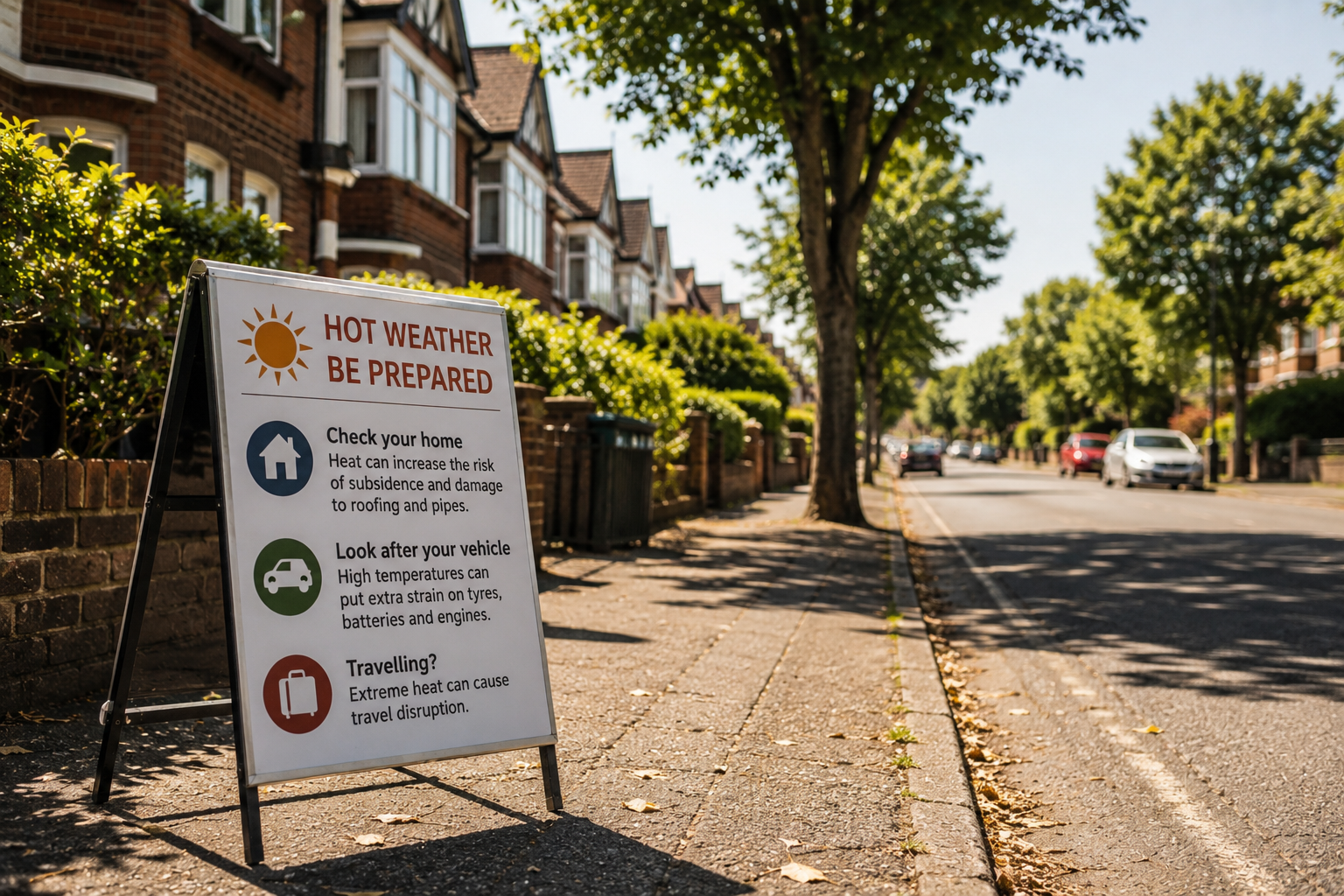
Homes were not built for Mediterranean temperatures
Much of the UK's housing stock was designed to retain heat, not repel it.
Prolonged periods of high temperatures can place additional strain on buildings. Materials expand and contract more frequently. Roof coverings can deteriorate more quickly. Timber can dry out and move. Pipes and water systems can be affected by ground movement during extended dry spells.
The insurance industry is already paying close attention to subsidence risks. Long periods of hot, dry weather can cause clay soils to shrink, leading to movement beneath buildings and potentially costly structural claims.
The UK's hottest summer on record in 2022 was associated with a significant increase in subsidence claims, according to industry figures. Association of British Insurers reported that subsidence claims reached record levels following the extreme summer temperatures.
Vehicles don't always enjoy the heat
Modern cars are remarkably resilient, but extreme temperatures create additional wear and tear.
Tyres, batteries, cooling systems and air-conditioning units all work harder during hot weather. Road surfaces can soften, particularly under heavy traffic, and prolonged heat can accelerate deterioration of vehicle components.
Electric vehicles introduce new considerations too. While EVs generally perform well in hot conditions, battery cooling systems become increasingly important as temperatures rise.
Although most of these issues are maintenance concerns rather than insurance claims, higher temperatures can contribute indirectly to breakdowns, accidents and disruption.
Travel risks may evolve
Travel insurance has traditionally focused on events such as illness, cancellations and lost luggage.
However, extreme heat can increasingly affect travel itself. Wildfire risks in southern Europe, heat-related transport disruption and temporary closures of tourist attractions have all become more common topics in recent years.
The travel industry has long managed risks associated with storms and natural disasters. Heat may increasingly join that list.
The challenge for insurers
Insurance works by assessing risk and pricing policies accordingly.
If certain events become more frequent or more severe, insurers must account for that when calculating premiums and reserves.
This doesn’t necessarily mean insurance will become dramatically more expensive. The industry is exceptionally good at analysing data and adapting to changing conditions. However, it does mean that long-term weather trends are being studied very closely.
Global reinsurers, the companies that insure insurers, have repeatedly identified climate-related risks as one of the most important challenges facing the industry during the coming decades.
Heat affects more than property
One of the more interesting questions is whether heat will create entirely new patterns
of risk.
For example:
Will more people work from home during heatwaves, changing occupancy patterns?
Will demand increase for home cooling systems and associated electrical installations?
Will outdoor leisure activities become more common, creating different liability exposures?
Will infrastructure face greater strain during prolonged hot periods?
The answers are not yet clear, but insurers spend a great deal of time thinking about emerging risks before they become obvious to the wider public.
Looking beyond today's weather
Nobody can predict exactly what future summers will look like. Britain will probably continue to experience a mixture of heatwaves, rainstorms and everything in between.
What seems certain is that insurers, governments and property owners are paying increasing attention to how changing weather patterns affect risk.
At Grove & Dean, we help customers navigate an ever-changing world of home, motor and travel insurance. While today's weather may feel unusual, understanding how risks evolve over time is an important part of ensuring people remain properly protected.
The weather outside may change by the hour. The challenge for insurers is understanding how those changes add up over years and decades.