



MoT Exemption and Insurance: A Grove & Dean Guide
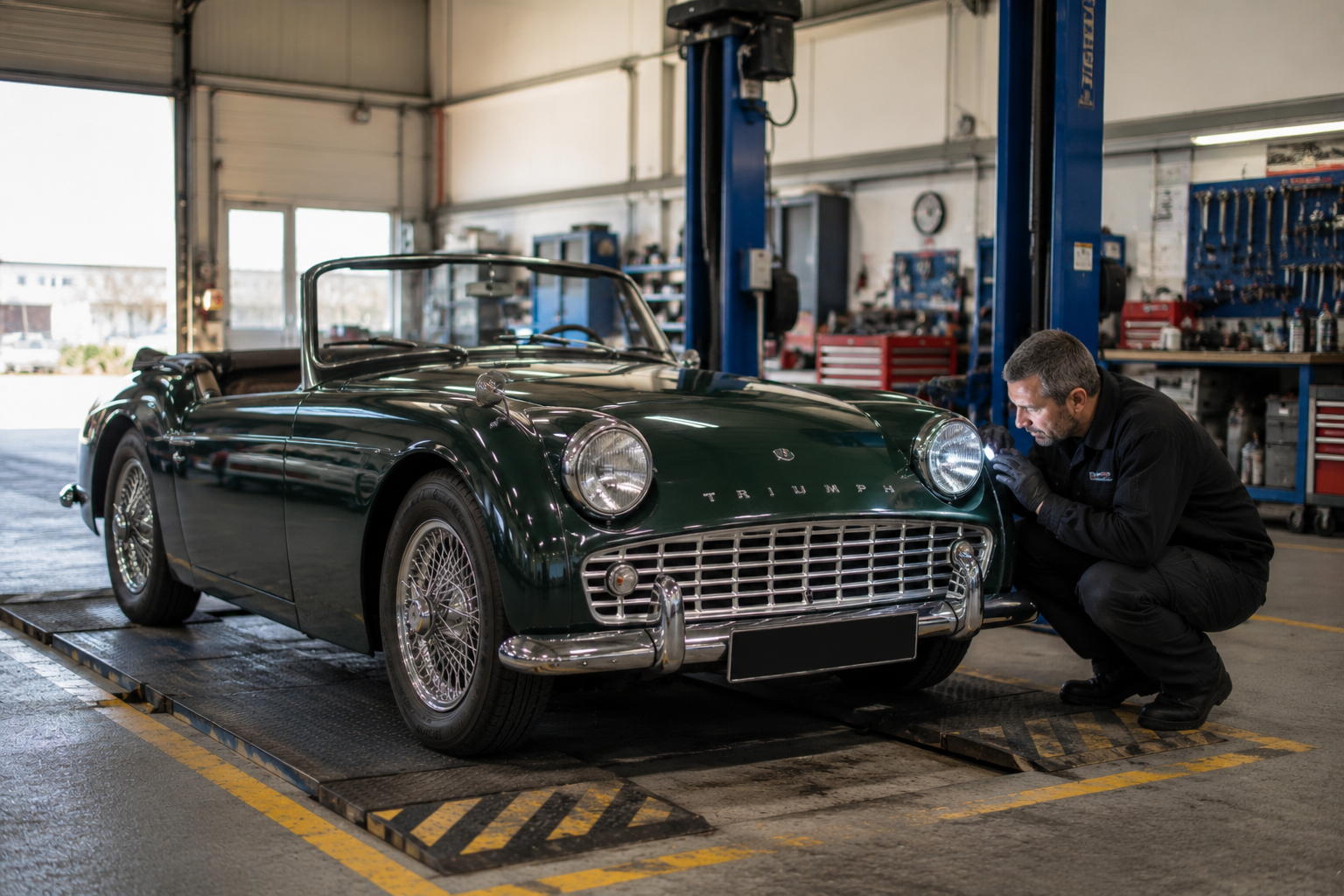
How MoT Exemption Affects Historic Vehicle Insurance
MoT exemption for historic vehicles continues to prompt questions among classic car owners. Many want reassurance about whether the absence of a MoT certificate could affect insurance cover, agreed value, or the outcome of a claim.
As specialists in classic car insurance, Grove & Dean understand the concerns enthusiasts have about protecting both their vehicles and their investment. The good news is that MoT exemption does not invalidate insurance cover, provided the vehicle remains roadworthy and meets legal requirements.
Why some historic vehicles are exempt from MoT testing
In 2018, the UK introduced a rolling 40-year MoT exemption. The change followed sustained input from organisations including the Federation of British Historic Vehicle Clubs, who demonstrated that well-maintained historic vehicles present a low road safety risk.
Many classic vehicles are carefully preserved, driven infrequently, and maintained by knowledgeable enthusiasts. However, some older vehicles, especially pre-war models, do not fit easily within a modern digital MoT system. Features such as cable-operated brakes, fly-off handbrakes, or trafficator indicators are not always easily assessed within a standardised test process.
Vehicles more than 40 years old may qualify for exemption if they have not been substantially modified within the past 30 years. Owners must declare the vehicle as a Vehicle of Historic Interest and ensure it remains roadworthy at all times when used on the road.
The exemption reflects the reality that historic vehicles are not everyday transport. They form part of our motoring heritage and are typically maintained to a high standard.
Does not having an MoT affect insurance cover?
All motor insurance policies require vehicles to be kept in a roadworthy condition – that’s the key issue
An MoT certificate confirms that a vehicle met the minimum legal standard at the time of testing. It does not guarantee roadworthiness in the future. Equally, not having an MoT certificate does not automatically mean a vehicle is unsafe.
If a vehicle qualifies for MoT exemption and is properly maintained, the absence of an MoT does not invalidate insurance cover.
The key requirement remains unchanged. The vehicle must always be safe to drive.
Does MoT exemption affect agreed value?
A common concern is whether MoT exemption influences agreed value.
Agreed value for insurance is based on condition, provenance, rarity, and market demand. Evidence often includes photographs, documentation, and sometimes club verification.
The presence or absence of an MoT certificate does not affect agreed value. The vehicle’s worth is determined by the market, not by whether it has undergone statutory testing.
Can insurers refuse a claim because there is no MoT?
Some owners worry that insurers may rely on technicalities to decline claims. In practice, this is very rarely the case.
Third-party liability is required under the Road Traffic Act. Insurers cannot refuse to meet third-party obligations solely because a vehicle does not hold an MoT certificate.
Policy wording may allow a reduction in settlement if a vehicle is proven to be unroadworthy and that defect directly caused the accident. This would require clear evidence that a known issue directly contributed to the incident, a high threshold that is rarely encountered within the historic vehicle sector.
Maintaining the vehicle properly and using it responsibly ensures cover operates as intended.
Why voluntary testing can still be worthwhile
Even though a MoT may not be required, periodic inspection can still be beneficial.
National MoT data consistently shows that most failures relate to routine wear rather than major mechanical problems. Common issues include:
brake imbalance or deteriorating hoses
ageing tyres where rubber may crack over time
worn wiper blades or minor visibility issues
lighting faults such as blown bulbs or poor alignment
worn suspension components including bushes and dampers
These are gradual changes that can be easy to overlook. A second set of trained eyes can help identify developing issues before they become more serious.
Many enthusiasts choose voluntary testing, regular servicing, or club inspections for reassurance. Maintaining high standards helps protect both individual vehicles and the reputation of the historic vehicle community.
Grove & Dean’s Experience
As experienced providers of classic car insurance, Grove & Dean recognise the passion owners have for preserving historic vehicles and, in our experience, classic cars are generally excellently maintained and driven carefully.
MoT exemption does not invalidate insurance cover. It does not reduce agreed value. It does not provide an easy reason for claims to be declined.
The responsibility remains consistent for all vehicle owners. Keep the vehicle roadworthy and properly maintained.
For many classic car enthusiasts, voluntary testing offers additional peace of mind and helps ensure these vehicles continue to be enjoyed safely for years to come.