



Why Modern Cars Are Bigger Than Ever Before
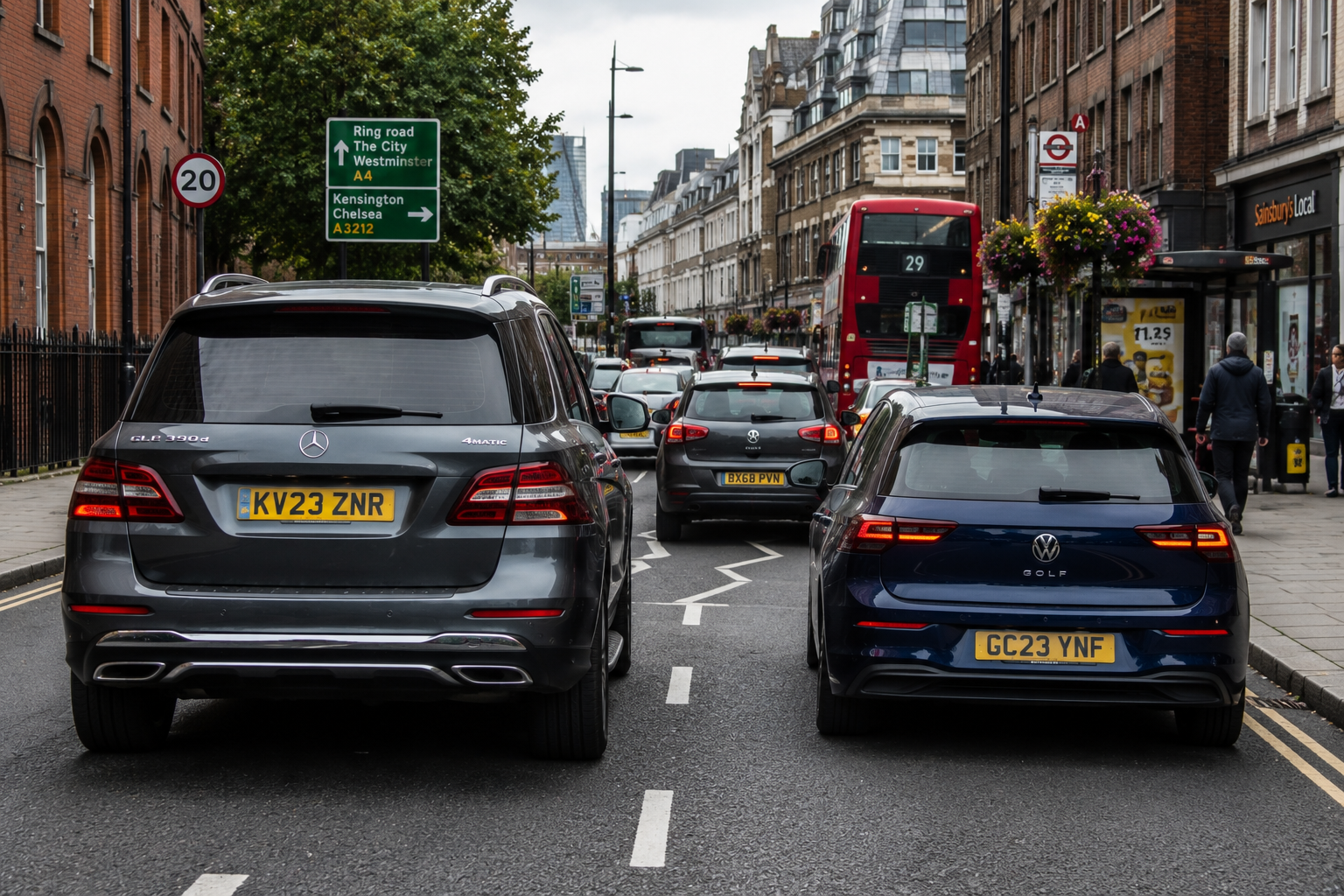
Why Have Cars Become So Much Bigger?
I drove to Wales from London at the weekend. Mixed in amongst the somewhat boring white, silver and black SUVs and electric crossovers making their way down the M4 was a fantastic mix of colourful cars from the 1970s and 1980s - there must have been a classic car event taking place – Ford Cortinas, Granadas, Minis, old BMWs, Citroens, Alfas – a real mix of recent classic motoring
And what really stood out was not so much the individual styling. But the size.
Cars that once felt substantial now looked tiny alongside modern traffic. Even large family estates from the 1980s seemed narrow and low compared with today’s vehicles.
Mini by name (only)
Perhaps the most obvious example is the Mini compared with the original Mini designed by Alec Issigonis.
The original Mini launched in 1959 was tiny by modern standards. It measured just over 3 metres long and weighed around 600kg depending on version. It was brilliantly efficient in its use of space and became one of Britain’s most recognisable cars.
The modern BMW Mini kept many of the design cues, including the round headlights and contrasting roof, but the dimensions changed dramatically. Today’s Mini Hatch is more than half a metre longer and significantly wider and heavier than the original.
The same trend appears elsewhere. The modern Fiat 500 is far larger than the classic Fiat 500. The newly revived Renault 5 E-Tech may reference the original Renault 5 visually, but it is still much larger and heavier due to modern engineering and battery technology.
Cars Have Grown in Almost Every Direction
According to data from the Society of Motor Manufacturers and Traders and vehicle specification archives, many modern family cars are between 15% and 30% larger than their equivalents from the 1970s and 1980s.
Weight has increased too.
An average family hatchback from the early 1980s might weigh around 800kg to 950kg. Many modern equivalents now weigh 1,300kg to 1,700kg. Electric vehicles can be heavier still because of large battery packs.
For example:
An original Mini often weighed under 650kg
A modern Mini Cooper can weigh more than 1,300kg
A 1980s Ford Cortina estate weighed roughly 1,100kg
Many modern SUVs exceed 1,800kg
That extra bulk changes how cars feel on the road. It also affects braking distances, tyre wear and even how quickly road surfaces wear down.
Why Have Cars Become Bigger?
There is not one single reason. Several factors have pushed vehicle sizes steadily upward over the decades.
Safety Regulations
Modern cars are vastly safer than older vehicles. Crumple zones, side impact protection, reinforced passenger cells, airbags and advanced electronics all take up space and add weight.
A car from the 1970s that crashed at motorway speed offered nowhere near the same level of occupant protection as a modern vehicle.
Programmes such as Euro NCAP encouraged manufacturers to improve crash safety standards further from the late 1990s onwards.
Consumer Expectations
Drivers expect far more comfort now.
Air conditioning, infotainment systems, larger seats, sound insulation, electric motors, panoramic roofs and advanced driver assistance systems all add weight and size.
Many buyers also simply prefer sitting higher on the road, which partly explains the rise of SUVs and crossovers.
Electric Vehicles
Battery technology adds considerable mass. Even relatively small EVs can weigh hundreds of kilograms more than petrol equivalents.
Manufacturers often compensate by making cars physically larger to package the batteries efficiently.
Marketing and Competition
Car makers have gradually moved models upwards in size over time. A modern supermini can now feel almost as roomy as a family hatchback from 20 years ago.
Meanwhile, manufacturers introduced new crossover categories between traditional hatchbacks and full SUVs, creating a market where bigger often became associated with better value.
The Problem Nobody Planned For, Parking Spaces
Here is where modern motoring meets old infrastructure.
Many UK multi-storey car parks were designed in the 1950s, 60s and 70s when cars were dramatically narrower. Parking bay widths and access often reflected the dimensions of the vehicles of the day.
The British Parking Association notes that older parking spaces can still measure around 2.3 metres wide, while many modern vehicles now approach or exceed 2 metres wide once mirrors are included.
Modern SUVs often barely fit within the painted lines, leaving little room for passengers to get out without performing yoga manoeuvres between concrete pillars.
Bigger Cars, Smarter Bumpers and More Complex Repairs
Interestingly, while cars have become larger and heavier, they have also become much better at dealing with minor knocks and low-speed impacts.
Older vehicles often relied on exposed chrome bumpers, which could bend, dent or rust quite easily. Modern bumpers are usually made from flexible plastics and energy-absorbing materials designed to absorb small impacts without obvious visible damage.
That is useful in tight supermarket car parks and older multi-storey spaces where modern cars can feel squeezed into bays never designed for them.
However, today’s vehicles also hide a huge amount of technology beneath their smooth bumpers. Parking sensors, reversing cameras, radar systems and driver assistance technology are often fitted directly behind body panels.
So while a light bump may leave no obvious mark, repair bills can still become surprisingly expensive if hidden sensors or electronics are damaged or need recalibrating afterwards.
From an insurance perspective, this is one reason why repair costs for modern cars have risen sharply in recent years. At Grove & Dean understanding how modern vehicles are changing is an important part of helping drivers choose cover that suits today’s increasingly complex cars, whether that is a classic Mini or a modern electric SUV packed with technology.
Looking Back, and Looking Ahead
Seeing those older cars on the motorway was a reminder of how dramatically motoring has changed in a relatively short time.
What once counted as a large family car can now look surprisingly compact beside today’s traffic. Yet despite the growth in size, many drivers still feel they never quite have enough boot space.
The irony is that while phones, televisions and electronics have become smaller and slimmer over the decades, the family car has quietly headed in the opposite direction.
And somewhere in an ageing multi-storey car park, a 1978 Ford Cortina is probably still able to open both doors comfortably at the same time.