



Driving in Europe This Summer? Essential Rules Every UK Motorist Should Know
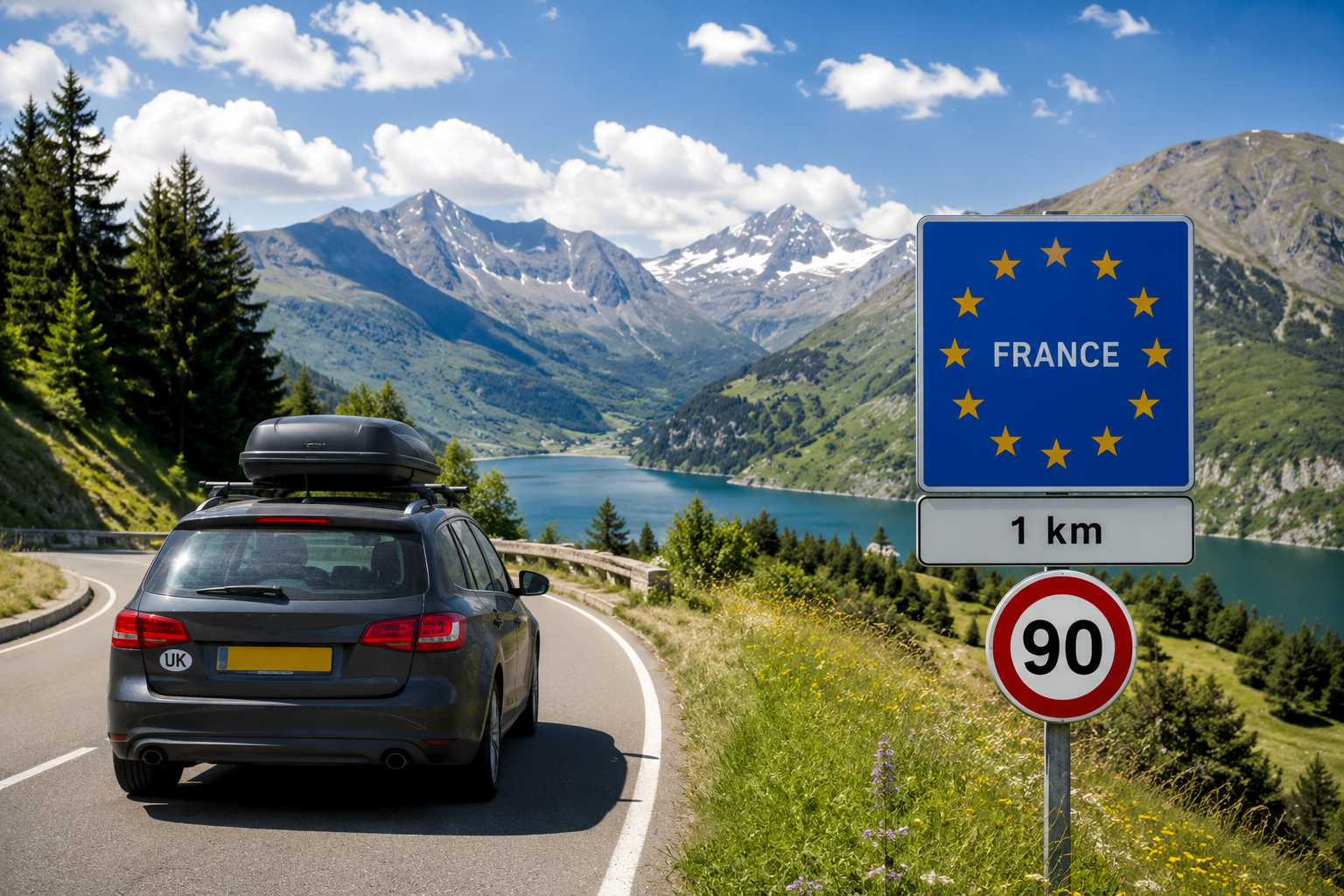
The essential rules every UK motorist should know, when driving in Europe this summer.
With air fares remaining high and the appeal of a European road trip as strong as ever, many UK drivers are choosing to take their cars abroad this summer. Before setting off, however, it's worth checking that you're familiar with the local driving laws in the countries you plan to visit.
Many motorists assume that the rules are broadly similar across Europe. While that's often true, there are some surprising differences that could leave drivers facing fines, penalty points or other penalties if they're caught unaware. Recent reports have highlighted several lesser-known regulations that UK motorists should know before heading overseas.
France: Check your sat-nav settings
Many drivers rely heavily on sat-navs when travelling abroad. In France, however, there are restrictions on devices that display the precise location of speed cameras.
Navigation systems can provide warnings about general danger zones, but displaying exact camera locations is prohibited. Drivers using devices that breach the rules could face significant fines and, in some circumstances, authorities may confiscate the device.
Before travelling, it is worth checking that any navigation apps or devices are configured correctly for the countries you intend to visit.
Germany: Running out of fuel isn’t tolerated!
Germany's famous Autobahn network attracts drivers from around the world, but motorists should be aware that stopping unnecessarily is taken seriously.
Running out of fuel on the Autobahn is generally considered avoidable and may result in a fine. Drivers are expected to ensure that their vehicle is roadworthy and that they have sufficient fuel before beginning their journey.
This serves as a useful reminder to plan fuel stops carefully, particularly when travelling long distances through unfamiliar areas.
Portugal: Leave the spare fuel can at home
Many UK motorists view carrying a small emergency fuel container as sensible preparation for a long journey. In Portugal, however, carrying spare petrol containers in a vehicle can lead to substantial penalties.
The authorities regard loose fuel containers as a safety risk and enforcement can be strict.
As regulations vary between countries, it's always worth checking local requirements before packing equipment that may be perfectly legal in the UK.
Remember to drive on the right!
One of the biggest adjustments for UK motorists driving in mainland Europe is remembering to stay on the right-hand side of the road! While it sounds simple, it's surprisingly easy to slip back into familiar habits, particularly when pulling out of petrol stations, car parks or quieter side roads, or when approaching roundabouts.
A simple reminder on your dashboard, such as a small note or sticker, can help reinforce the change until it becomes second nature.
Research commissioned by the Foreign, Commonwealth & Development Office (FCDO) found that almost one in three (31%) British motorists admitted to accidentally driving on the wrong side of the road while driving abroad. The same research also found that more than one in ten had driven the wrong way around a roundabout, highlighting just how easy it is to revert to UK driving habits, especially during the first few hours of a journey.
Know the local speed limits
Speed limits vary across Europe, so it's important not to assume they're the same as those in the UK.
On motorways, the limit is typically 130km/h (around 81mph), although some sections of Germany's Autobahn remain unrestricted. In some countries, motorway speed limits are reduced during poor weather, while others introduce seasonal limits during the winter months.
Away from motorways, rural roads are commonly limited to between 80km/h and 90km/h, while the standard speed limit in many towns and cities is 50km/h.
Speed cameras and roadside enforcement are common across Europe, and penalties can be substantial. In France, for example, speeding fines can range from €45 to €1,500 depending on the severity of the offence. Before setting off, it's worth checking the speed limits in every country you'll be driving through to help avoid costly penalties.
Check for low-emission zones
Like the UK, many European cities now operate low-emission or restricted traffic zones designed to improve air quality. Depending on where you're travelling, you may need to register your vehicle, purchase a permit or display an emissions sticker before entering certain areas.
Italy has more than 350 camera-enforced Limited Traffic Zones (ZTLs), where drivers entering without permission can receive automatic fines. France operates its Crit'Air emissions scheme in several major cities, including Paris, Lyon, Marseille, Nice, Strasbourg and Toulouse. Vehicles travelling in these areas may need to display a valid Crit'Air vignette on the windscreen.
As the rules vary between countries – and sometimes even between cities – it's worth checking the requirements before you travel to avoid any unexpected charges or penalties.
Towing a caravan or trailer?
If you're planning to tow a caravan or trailer on your European road trip, there may be additional rules to consider before you leave the UK.
Trailers with a gross weight of more than 3,500kg may need to be registered before travelling abroad and, in some cases, require their own registration plate rather than displaying the same number plate as the towing vehicle.
Before you set off, it's worth checking the latest UK Government guidance on trailer registration and the towing regulations for any countries you plan to visit to ensure you're travelling legally.
Essential equipment to take with you
Before travelling, it's worth checking the specific requirements for every country on your route, as mandatory equipment varies across Europe. Some of the most common requirements include:
High-visibility jackets – Required in countries including France, Spain, Italy, Belgium, Austria and Portugal. In many countries, the jacket must be kept inside the vehicle so it can be worn before exiting in an emergency.
Warning triangles – Compulsory in most European countries, including France, Spain, Germany, Italy and Belgium. Spain now requires a V16 emergency warning light for Spanish-registered vehicles, although foreign-registered vehicles can continue to use a warning triangle.
Headlamp beam deflectors – Required when driving a right-hand-drive UK vehicle in countries where traffic drives on the right, including France, Spain, Germany, Belgium, the Netherlands and Italy, unless your vehicle has adaptive headlights that can be adjusted for continental driving.
Low-emission permits or emissions stickers – Required in many cities across France, Germany, Austria and Spain, while Italy operates numerous restricted traffic zones (ZTLs) that may require prior authorisation or restrict access altogether.
UK country identifier – Since September 2021, UK-registered vehicles travelling abroad must display a UK identifier. If your number plate doesn't already include the UK identifier, you'll need a separate UK sticker when driving in most European countries.
Vignettes or road-use permits – Several countries require motorists to buy a motorway vignette or toll pass before using certain roads. These include Austria, Switzerland, Slovenia, Slovakia, the Czech Republic, Hungary, Romania and Bulgaria.
Winter tyres or snow equipment – During the colder months, countries including Germany, Austria, Sweden, Finland and parts of France and Italy have seasonal requirements for winter tyres or snow chains, depending on weather conditions and where you're travelling.
Essential documents – Always carry your full UK driving licence, V5C vehicle registration certificate, motor insurance details, passport and any breakdown cover information. Some countries may also require an International Driving Permit (IDP), depending on the type of licence you hold and where you're travelling.
Requirements can change, so it's worth checking the latest guidance for each country before setting off to ensure you have everything you need and avoid unnecessary fines.
And... don't forget your insurance!
Before travelling abroad, it's important to check exactly what cover your motor insurance provides.
Many UK policies automatically provide the minimum legal level of cover required for driving within EU countries, but the level of protection for your own vehicle may vary. Comprehensive cover in the UK doesn't always mean you'll have the same level of protection while driving overseas.
If you're a Grove & Dean motor insurance customer, breakdown assistance is already included as part of your policy. If you're planning to drive in Europe, you can upgrade your breakdown cover to include European assistance at any time before you travel. Simply get in touch with our Customer Services team, who'll be happy to arrange this for you.
It's also worth checking how long you're covered for when driving abroad and whether you'll need any additional documentation for the countries on your itinerary.
Preparing for a smoother journey
A little preparation before you set off can help avoid unexpected costs and unnecessary stress during your holiday.
At Grove & Dean, we regularly help motorists understand the practicalities of vehicle insurance and driving abroad.
So, before you head off this summer, take a few minutes to check the local rules, confirm your insurance arrangements and ensure you have the correct documentation. It could save you a great deal of trouble once you're on the road.