



How to Look After Your Motorhome During Winter Storage
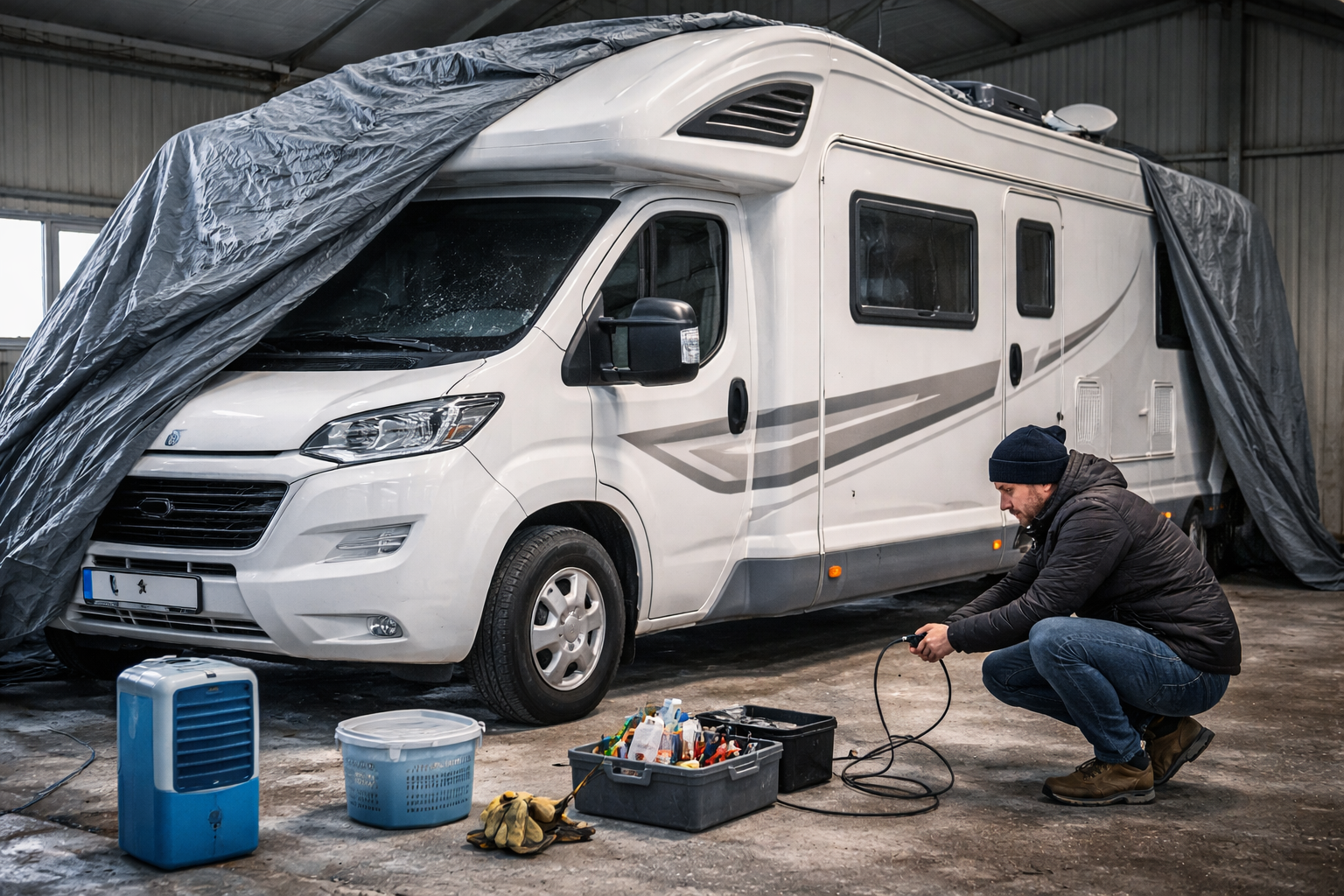
Keeping your motorhome protected during the colder months
Seasoned motorhome owners often have a well-established winter routine, but many vehicles still suffer from avoidable “post-hibernation” problems when spring arrives. Damp interiors, flat batteries, tyre damage and stale systems are all common issues after a long lay-up.
This guide outlines simple but effective steps to help keep your motorhome safe, secure and well maintained throughout the winter break.
Winter naturally brings a quieter period for touring. Once trips are finished and temperatures drop, motorhomes often remain unused for weeks or even months. While this pause is expected, it can leave vehicles vulnerable to moisture, mechanical wear and deterioration if preparation is overlooked.
A few straightforward tasks can make a major difference — each protecting a different part of your vehicle and helping preserve its long-term value.
Clean Before You Store
A thorough clean is the best place to start.
Road dirt, salt, tree sap and grime left on bodywork over winter can trap moisture and encourage corrosion. Washing the exterior allows the surface to dry properly and makes it easier to spot small chips or scratches that may need attention before storage.
The interior should be treated with the same care. Leftover food, damp clothing or forgotten toiletries can quickly lead to unpleasant odours or mould during long periods of inactivity. A dry, tidy interior holds up far better through winter.
Keep Moisture Under Control
Moisture management is one of the most important winter considerations.
Motorhomes are especially prone to condensation because temperatures often fluctuate between cold nights and milder daytime conditions. Many owners place moisture absorbers inside the living space to reduce humidity.
Leaving curtains slightly open also encourages air movement, and any soft furnishings should be fully dry before storage begins. Trapped damp is one of the main causes of mould growth over the winter months.
Mechanical Maintenance Matters
Mechanical systems also need attention before a prolonged lay-up.
Battery care
Batteries do not cope well with months of inactivity. Many owners disconnect the battery or maintain charge using a smart trickle charger. This helps prevent sulphation — a process where battery plates degrade if left at low charge for too long.
Fuel and oil protection
Fuel can deteriorate over time, so topping up the tank reduces the amount of air inside and helps limit condensation within the fuel system.
Changing engine oil before storage can also be beneficial, as used oil may contain acids that are less suitable during long periods of non-use.
Don’t Overlook the Tyres
Tyres are another key winter concern.
A heavy motorhome sitting in one position for months can develop flat spots, particularly in colder temperatures. Moving the vehicle slightly from time to time can reduce this risk.
Some owners increase tyre pressure slightly (within safe manufacturer limits) to ease strain on the sidewalls. It’s also worth checking weight distribution, so suspension components do not settle unevenly.
Secure Your Motorhome Properly
Security remains essential during winter storage.
A motorhome left stationary on a driveway or storage compound can be an attractive target. Simple precautions can significantly reduce risk:
Lock all windows and doors
Secure internal access points
Remove valuables from view
Check alarms or trackers are active and functioning
A quick security check before lay-up can provide reassurance for the months ahead.
Protect the Water System
Water systems must be prepared carefully.
Even small amounts of water left in pipes or tanks can freeze during cold snaps, potentially splitting seals or damaging fittings. Fully draining the system avoids this risk.
Many owners run taps briefly after draining to ensure remaining water clears connectors and bends. Waste tanks should also be emptied to prevent residue freezing during sharp frosts.
Inspect External Fixtures
Exterior fittings and seals deserve attention too.
Roof vents, awning brackets, rubber trims, hinges and seals can all react to prolonged cold. A final inspection before storage can reveal drying rubber or loose fittings.
Applying a light silicone treatment to rubber seals helps keep them flexible and reduces the chance of cracking over winter.
Final Thoughts
Once these steps are completed, your motorhome can rest safely through the colder season. Small preparation jobs protect interiors, preserve mechanical systems, reduce damp issues and help maintain your vehicle’s value.
Happy hibernation — and here’s to a fantastic year ahead on the road.
Want to make sure your motorhome has the cover it needs? Get a motorhome insurance quote with Grove & Dean today.