



Government Launches New UK Road Safety Strategy
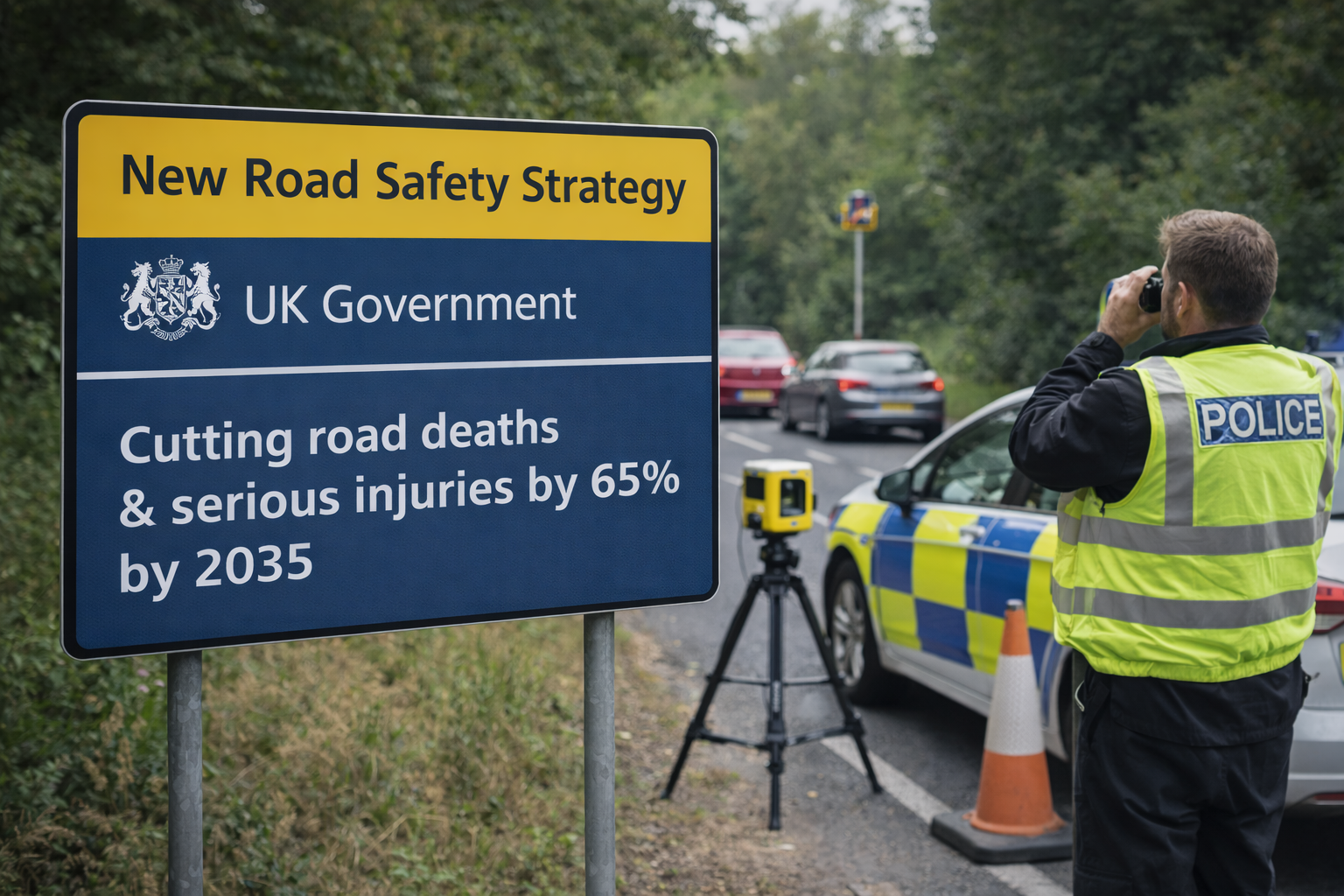
UK Unveils New Road Safety Strategy to Cut Fatalities Dramatically
The UK Government has announced a major new Road Safety Strategy designed to prevent thousands of deaths and serious injuries over the next ten years. Notably, this is the first national road safety strategy introduced in more than a decade.
The initiative reflects growing concern that progress in reducing road casualties has slowed, despite road deaths remaining a daily reality across Britain.
Major Targets for Reducing Deaths and Injuries
At the heart of the strategy is an ambitious goal: to reduce road fatalities and serious injuries by 65% by 2035. For children aged under 16, the Government aims for an even sharper reduction of 70%.
The Department for Transport says the plan has been developed in response to years of stalled improvement and the continued loss of life on UK roads.
Transport Secretary Heidi Alexander described the announcement as a critical shift, stating:
“Every life lost on our roads is a tragedy that devastates families and communities. For too long, progress on road safety has stalled. This strategy marks a turning point.”
Government statistics suggest that roughly four people die on Britain’s roads every day, while many more are left with life-altering injuries. The new approach focuses on addressing the most frequent causes of serious collisions and encouraging lasting behavioural change.
Proposed Changes to Driving Behaviour and Standards
A number of potential reforms are included within the strategy, many of which will be subject to consultation.
Drink-driving limits under review
One key proposal is a consultation on lowering the legal drink-drive limit in England and Wales, aligning it more closely with Scotland’s stricter threshold.
The Government is also considering the use of alcohol interlock devices for repeat offenders, preventing vehicles from starting if alcohol is detected.
Tougher expectations for new drivers
The strategy also highlights plans to strengthen requirements for newly qualified drivers. Proposals include introducing mandatory minimum learning periods, ensuring learners build up more practical experience before driving independently.
New measures for older motorists
Older drivers are another focus area. The Government intends to consult on introducing compulsory eyesight testing for drivers aged 70 and above, with the potential for cognitive assessments in certain cases.
Increased Enforcement Across UK Roads
Alongside behavioural reforms, enforcement is expected to play a significant role.
The Government says it will intensify action against:
Uninsured drivers
Vehicles being used without valid MOTs
Illegal or cloned number plates
These steps are designed to improve safety while supporting fairness for motorists who follow the rules.
The AA Charitable Trust welcomed the announcement, describing the strategy as overdue and commending its emphasis on drink-driving, seatbelt compliance and tackling uninsured vehicles.
Implications for Drivers, Employers and Insurers
The strategy also extends beyond private motorists.
New expectations for businesses
A proposed National Work-Related Road Safety Charter would introduce clearer standards for employers whose staff drive as part of their role, aiming to reduce road risk linked to work activity.
A shift in policy direction
For drivers, fleet managers and insurers, the overall message is clear: the UK is moving towards stricter driving standards, tougher enforcement, and increased accountability.
As consultations progress, motorists and businesses should remain informed and prepare for potential changes that may affect driving habits, compliance obligations and insurance outcomes.
If your motor insurance renewal is approaching, it may be a good time to check you have the right cover in place and request an up-to-date quote.